

- English
Hello! How are you?I am fine, thank you 1
Hello! How are you?I am fine, thank you 1
- Theory with exercises
- Beginner
 English

Hello! How are you?I am fine, thank you 1
English
In this class we will discuss music and revise future tenses
English

In this class we will play a Christmas quiz and learn new facts and words related to New Year and Christmas time.
EnglishIn this class we will go deeper in the topic of Psychology
EnglishIn this class we will discuss family and learn have got
English
In this class we will discuss the topic of travelling, learn new vocabulary like transport and other. Also we will revise comparative and superlative adjectives.
English
In this lesson we will discuss renovation topic, learn new words. talk about the experience of creating renovation. After we will revise past and present tenses.
EnglishIn this class we will discuss unusual job positions, companies and articles
EnglishIn this class we will talk about hobbies and revise Present vs Future Simple
English
In this lesson we will discuss small talk and practice present simple and present continious
English
A1 English Listening Practice - Daily Routine, Present Simple
English
Mafia game club GLOW for B1 level
English

GLOW marathon 2 , day 1 , ancient Egypt
English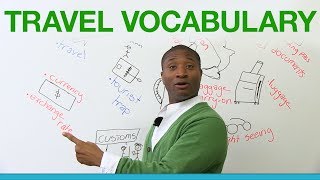
Learn important, basic words you will need when you travel. Knowing a little English vocabulary can help a lot when you are travelling. Whever you are going in the world, you can almost always find someone who speaks some English.
English

Подкаст, продолжительность 11 минут, Как в Австралии решают вопрос где и с кем оставить детей после школы, пока родители работают.
English
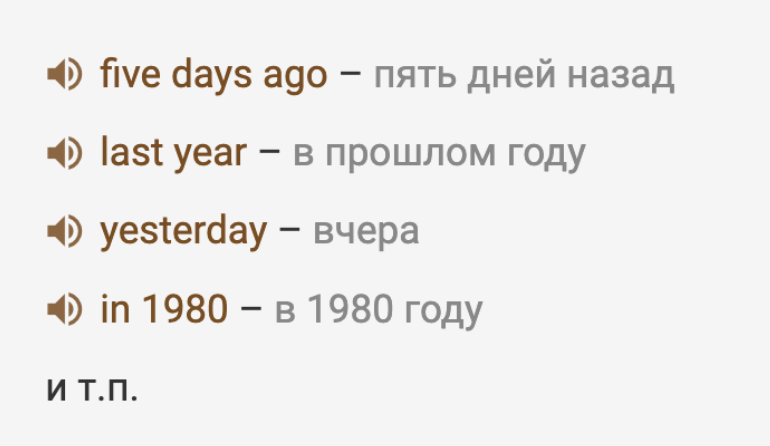
Время Past Simple используется для обозначения действия, которое произошло в определенное время в прошлом и время совершения которого уже истекло. Для уточнения момента совершения действия в прошлом при использовании времени Past Simple обычно используются такие слова, как:
English
Practice matching the opposite words!
English

In this course, we will create a powerful and articulate Personal Statement and create an ideal company profile to help you formulate an application for the job that fits you best. In day one, we will do introductions, and talk about some of our goals for the course.
English
Edward de Bono's Six Thinking Hats approach is a simple way to gain objective perception of information in all areas. Putting on a hat of a certain color, a person plays a certain role that corresponds to it, looks at the problem from a certain point of view. There are six hats: white, yellow, red, black, green and blue.
English
Monday – Tuesday – Wednesday – Thursday – Friday – Saturday – Sunday
Russian