E = mc2

  • Статья
  • Для экспертов
  • Английский

E = mc2, equation in German-born physicist Albert Einstein’s theory of special relativity that expresses the fact that mass and energy are the same physical entity and can be changed into each other. In the equation, the increased relativistic mass (m) of a body times the speed of lightsquared (c2) is equal to the kinetic energy (E) of that body.
 In physical theories prior to that of special relativity, mass and energy were viewed as distinct entities. Furthermore, the energy of a body at rest could be assigned an arbitrary value. In special relativity, however, the energy of a body at rest is determined to be mc2. Thus, each body of rest mass m possesses mc2 of “rest energy,” which potentially is available for conversion to other forms of energy. The mass-energy relation, moreover, implies that, if energy is released from the body as a result of such a conversion, then the rest mass of the body will decrease. Such a conversion of rest energy to other forms of energy occurs in ordinary chemical reactions, but much larger conversions occur in nuclear reactions. This is particularly true in the case of nuclear fusionreactions that transform hydrogen to helium, in which 0.7 percent of the original rest energy of the hydrogen is converted to other forms of energy. Stars like the Sun shine from the energy released from the rest energy of hydrogen atoms that are fused to form helium.

0
0
77

Другие уроки репетитора

0
31
Newton's Laws: Crash Course Physics #5
  • Физика

Newton's Laws: Crash Course Physics #5

I'm sure you've heard of Isaac Newton and maybe of some of his laws. Like, that thing about "equal and opposite reactions" and such. But what do his laws mean? And how do they help us understand the world around us? In this episode of Crash Course Physics, Shini talks to us about just that.
  • Видео
  • Стартовый
  • Английский
0
34
Friction: Crash Course Physics #6
  • Физика

Friction: Crash Course Physics #6

Why is it hard to move a heavy bookcase across a carpeted floor? And why is it easier to keep it moving than it was to get it started moving? You might think it's all about weight, but actually it's about friction. Two kinds of friction! In today's episode of Crash Course Physics, Shini Somara tells us about Static and Kinetic friction; how they work and how they're different.

  • Видео
  • Стартовый
  • Английский
0
22
Fluids in Motion: Crash Course Physics #15
  • Физика

Fluids in Motion: Crash Course Physics #15

Today, we continue our exploration of fluids and fluid dynamics. How do fluids act when they're in motion? How does pressure in different places change water flow? And what is one of the motion annoying things about filming outside on a nice day? I'll give you a hint on that last one... it's lawn mowers.

  • Видео
  • Стартовый
  • Английский
0
21
Derivatives: Crash Course Physics #2
  • Физика

Derivatives: Crash Course Physics #2

CALCULUS! Today we take our first steps into the language of Physics; mathematics. Every branch of science has its own way to describe the things that it investigates. And, with Physics, that's math. In this episode, Shini talks us through derivatives and how calculus helps us to understand the world around us.

  • Видео
  • Начальный
  • Английский

Популярные уроки

Подробнее
0
59
СИЛА УПРУГОСТИ
  • Физика

СИЛА УПРУГОСТИ

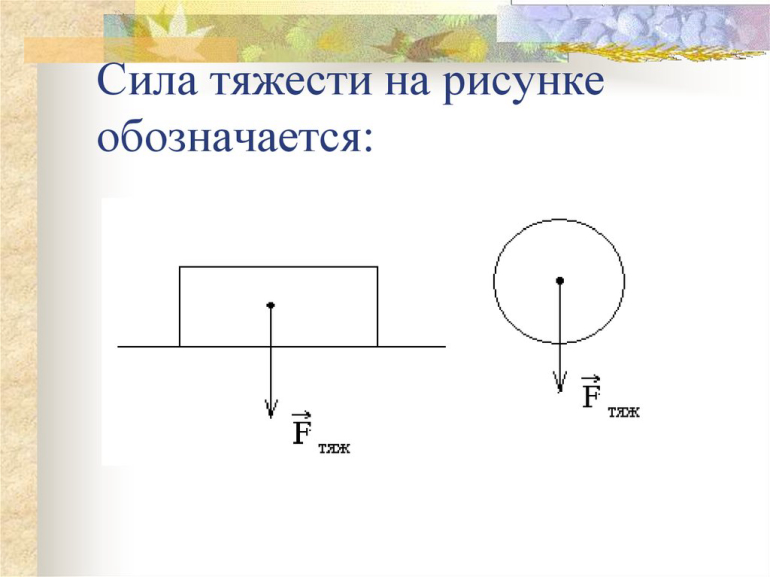
Вы уже знаете, что все тела на поверхности Земли испытывают ее притяжение. На любое тело, находящееся на поверхности Земли или вблизи ее, сила тяжести. Снежинка, падающая с неба, движется к Земле. Но, упав на крышу, она прекращает свое движение. Значит, что-то мешает снежинке двигаться вниз.

  • Теория с упражнением
  • Средний уровень
  • Русский
OnClass защищает персональные данные пользователей и обрабатывает Cookies только для персонализации сервисов. Запретить обработку Cookies можно в настройках Вашего браузера. Пожалуйста, ознакомьтесь с Условия обработки персональных данных и Cookies.