RU
How does Onclass work? Support Online now: 692

Video / Lessons

Popular lessons

Other lessons

0
24
Missing the Bus
  • English

Missing the Bus

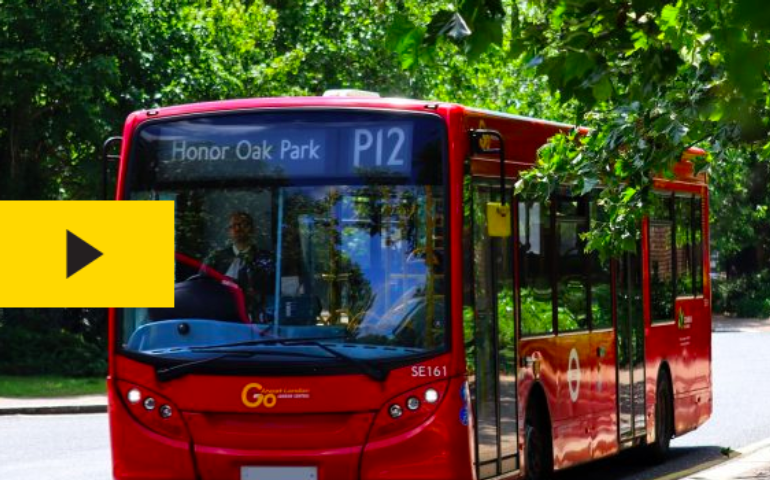
If you heard that there was a piece of technology that could do away with traffic jams, make cities more equitable, and help us solve climate change, you might think about driverless cars, or hyperloops or any of the other new transportation technologies that get lots of hype these days. But there is a much older, much less sexy piece of machinery that could be the key to making our cities more sustainable, more liveable, and more fair: the humble bus. Steven Higashide is a transit expert, bus champion, and author of a new book called Better Buses Better Cities. And the central thesis of the book is that buses have the power to remake our cities for the better. But he says that if we want the bus to reach its potential, we’re going to have to make the experience riding one, a lot more pleasant.

  • Podcast
  • Upper Intermediate
  • English
Eugeniia Klimutina
Eugeniia Klimutina
0
24
What time is it?
  • English

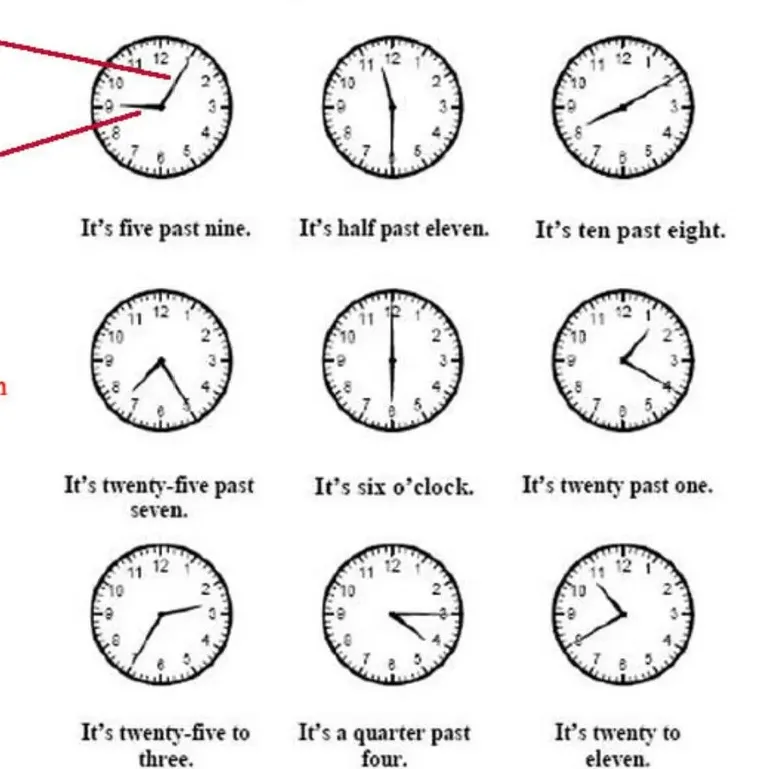
What time is it?

This lesson helps learners understand how to ask for and tell the time in English. Students will learn key expressions such as o’clock, half past, quarter past/to, and how to use a.m. and p.m. They will also practice common questions and answers: “What time is it? – It’s …” and “When does it start? – At …”. The lesson includes: Vocabulary and numbers 1–59 Different ways of telling the time (analog & digital clocks) Using past / to for minutes Expressions with in the morning/afternoon/evening, at night Daily routine activities with time references Activities involve dialogues, matching clocks with the correct time, and role plays to practice schedules and appointments. By the end of the lesson, learners will be able to confidently tell and ask the time in English.

  • Image
  • Beginner
  • English
Oleg Ivanov
Oleg Ivanov
0
24
Family
  • Russian

Family

In our next Russian lesson will introduce words and phrases associated with families. This will allow you to talk about your family, which is a very popular topic of conversation in Russia. One of the important concepts that we will introduce in this lesson is possessive pronouns. Possesive pronouns are words such as: my, your, his, her, and our. Personal pronouns are normally used to indicate the ownership of an object. The other method to indicate ownership is to use the genative case.

  • Theory
  • Beginner
  • Russian
Eugeniia Klimutina
Eugeniia Klimutina
0
24
The impact of technologies
  • English

The impact of technologies

AI is something that can truly change our reality, or has it already done it? Social media is already influencing us, that's for sure! In this lesson, you will look at the results of using new technologies and try to predict the possible effects this usage can have in the near future. The best predictor of future performance is past performance, right?

  • Theory with exercises
  • Intermediate
  • English
Darina Gribanova
Darina Gribanova
0
24
Exploring the history and industry of chocolate.
  • English

Exploring the history and industry of chocolate.

BOB DOUGHTY: I'm Bob Doughty. SHIRLEY GRIFFITH: And I'm Shirley Griffith with EXPLORATIONS in VOA Special English. Today we travel around the world exploring the history of chocolate. Its story begins with a plant whose scientific name, Theobroma cacao, means "food of the gods." For centuries, people have been enjoying the rich flavor of chocolate, a product made from this plant. Join us as we tell about the history of chocolate and how it is produced. We will also meet Jane Morris, a chocolate maker in Washington, DC. (MUSIC) BOB DOUGHTY: Most people today think of chocolate as something sweet to eat or drink than can be easily found in stores around the world. It might surprise you that chocolate was once highly treasured. SHIRLEY GRIFFITH: Historians believe the Maya people of Central America first learned to farm cacao plants around two thousand years ago. The Maya took the cacao trees from the rainforests and grew them in their gardens. They cooked the cacao seeds, then crushed them into a soft paste. They mixed the paste with water and flavorful spices to make an unsweetened chocolate drink. The Maya poured the chocolate drink back and forth between two containers so that the liquid had a layer of bubbles, or foam. Cacao and chocolate were an important part of Maya culture. There are often images of cacao plants on Maya buildings and art objects. Ruling families drank chocolate at special ceremonies. And, even poorer members of society could enjoy the drink once in a while.

  • Podcast
  • Intermediate
  • English
Eugeniia Klimutina
Eugeniia Klimutina